
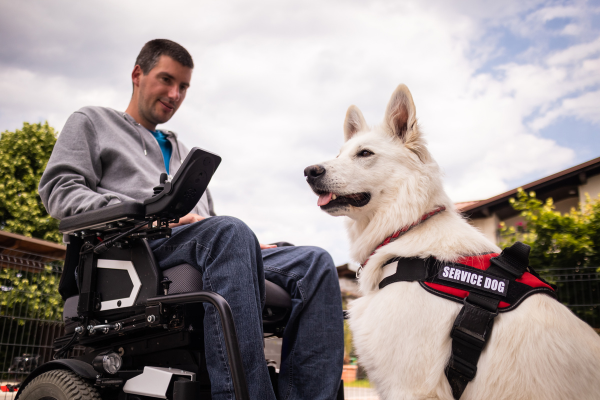
For individuals living with seizure disorders, life can feel unpredictable and scary. Seizures can strike without warning, creating safety risks and limiting independence. That’s where seizure alert dogs come in. Highly trained service dogs that can detect the onset of a seizure and respond to protect their handler. These extraordinary dogs are more than companions; they are life-saving partners.
At Justice Speaks, we are dedicated to educating the public about the tasks of service dogs, their vital roles, and the importance of accessibility for all. In this task spotlight, we highlight the incredible work of seizure alert dogs and share how they help handlers live safer, more confident lives.
What is a Seizure Alert Dog?
Training a seizure alert dog requires patience, precision, and a strong understanding of canine behaviour. Trainers use scent samples, behavior cues, and repeated reinforcement to help the dog recognize the unique chemical or behavioral signs that precede a seizure.
Training typically involves:
- Scent or behavior recognition: Dogs are exposed to scents or subtle physical cues associated with a seizure.
- Alert behavior reinforcement: Dogs are taught a reliable, consistent way to alert their handler.
- Public access and task reliability: Dogs learn to perform their task calmly and safely in real-world settings.
- Ongoing practice and evaluation: Seizure alert dogs continue refining their skills throughout their working life.
While some dogs have a natural talent for seizure detection, formal training ensures that these alerts are accurate and reliable. Handlers often work closely with trainers to tailor the dog’s responses to their specific needs and routines.
The Difference Between Seizure Alert and Seizure Response Dogs
It’s important to note that seizure alert dogs are different from seizure response dogs.
Seizure Alert Dogs
These dogs predict seizures before they occur, providing a warning so the handler can prepare.
Seizure Response Dogs
These dogs assist during or after a seizure, helping their handler recover safely by fetching medication, activating alarms, or providing physical support.
Some service dogs are trained in both tasks, but each role requires specialized skills.
The Impact of Seizure Alert Dogs
The benefits of seizure alert dogs extend beyond safety. Many handlers report increased independence, confidence, and peace of mind. For parents of children with seizure disorders, these dogs can offer invaluable reassurance, especially during sleep or in public spaces.
Studies and anecdotal evidence show that seizure alert dogs can reduce emergency incidents and help handlers maintain a higher quality of life. They also serve as a bridge between medical care and daily living, offering a productive, supportive presence that technology alone cannot provide.
How Can I Get a Seizure Alert Dog?
Many people wonder, “How can I get a seizure alert dog?” The process involves several key steps:
- Assessment of needs: A qualified trainer evaluates the person’s condition, lifestyle, and environment.
- Matching a dog: Trainers select a dog with the right temperament, aptitude, and physical health for seizure alert work.
- Training program: Dogs undergo months of training, often including both the alert task and public access preparation.
- Handler training: The person learns how to work with the dog, recognize alerts, and maintain the dog’s ongoing skill development.
It’s essential to work with reputable trainers or organizations that specialize in seizure alert dog training to ensure safety, reliability, and long-term success.
Educating Communities About Service Dogs
At Justice Speaks, we believe awareness is just as important as training. Our school programs teach students about service dog etiquette, accessibility, and disability rights, often using seizure alert dog demonstrations to highlight the extraordinary skills these animals possess.
By educating the public, we foster empathy, respect, and inclusion, helping prevent discrimination and misunderstandings that can make life harder for service dog teams. Supporting our educational programs helps us reach more classrooms, communities, and future advocates.
How You Can Support Justice Speaks
Seizure alert dogs are more than companions; they are partners, protectors, and lifesavers. You can help support their mission by:
- Donating to Justice Speaks to fund outreach, advocacy, and school programming.
- Sponsor a classroom visit to bring hands-on demonstrations to students.
- Share our mission to help friends, family, and colleagues understand the life-changing role of seizure alert dogs.
At Justice Speaks, we’re proud to advocate for service dog teams, educate the public about their vital work, and foster inclusive communities where people with disabilities can thrive. Learn more about seizure alert dogs, how to support our programs, or how to bring this education to your school today.