
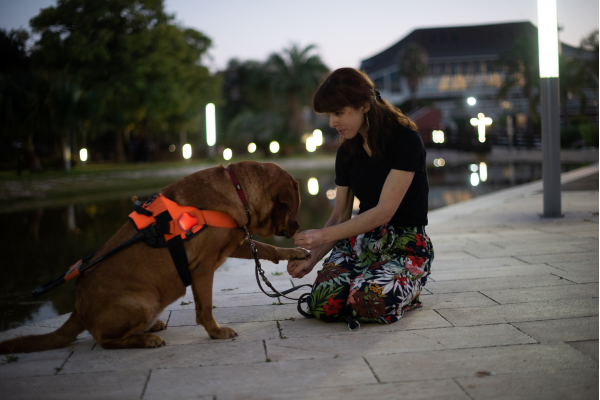
When people see a highly skilled service dog calmly assisting their handler, it’s easy to assume they are just “well-trained” like any other well-behaved dog. But the reality is much deeper and more intensive than most people realize. Service dogs don’t just learn obedience. They learn to perform life-saving, life-supporting, and independence-giving tasks with precision, reliability, and emotional steadiness in every environment.
This level of training doesn’t happen overnight, it doesn’t even happen in a few months, and it certainly doesn’t happen through quick online “certifications” or weekend courses. Understanding how long service dog training takes, and why it takes so long, helps the public better respect and understand these exceptional working animals, their handlers, and the teams that help prepare them for their life-changing roles.
So, How Long Does It Actually Take?
Most legitimate service dog programs and responsible owner-trainers spend 18 months to 2.5 years preparing a dog for service work. In some cases, especially for medical alert, mobility, or psychiatric service dogs, training may take even longer.
Training happens in phases, each requiring time, patience, consistency, and evaluation to ensure the dog is truly ready to work safely and confidently.
The First Phase: Puppy Foundations (0-6 months)
Training begins long before a dog ever learns a task. The foundation of a successful service dog starts with:
- Building confidence
- Learning basic manners
- Early socialization
- Exposure to real-world environments
- Developing calmness and focus
Even as puppies, potential service dogs are learning to regulate their emotions, stay composed in busy spaces, and trust their handler. These months are crucial; without a strong foundation, the dog can struggle in the long run.
The Second Phase: Advanced Obedience & Public Access Skills (6-18 months)
Once foundation skills are set, dogs begin advanced training. This includes:
- Perfected leash manners
- Ignoring distractions
- Settling quietly in public
- Remaining focused under stress
- Working safely around mobility aids, children, noise, food, and strangers
Unlike pet obedience, public access training prepares dogs to function in grocery stores, restaurants, hospitals, transit systems, airports, classrooms, workplaces, and emergencies. They must not bark, beg, wander, panic, or respond impulsively. They must be steady, reliable, and predictable. This level of behavioral maturity takes time, typically one year or more of consistent, structured work.
The Third Phase: Task Training
Only after strong obedience and public access behavior are in place do most teams start full task training. This is where service dogs learn specialized skills such as:
- Medical Alert – diabetic alert, seizure alert, cardiac alert
- Mobility Support – bracework, counterbalance, item retrieval, opening doors, assisting with transfers
- Psychiatric Support – interrupting panic attacks, deep pressure therapy, grounding, safety behavior
- Hearing Alerts
- Allergy Detection
Each task requires months of repetition, proofing, real-world testing, and reliability training. The dog must perform even when tired, stressed, or distracted, because their handler depends on it.
Not Every Dog Completes Training
Even with incredible effort and expert training, not every dog is suited to become a service dog. Many are “career changed” and become wonderful pets or therapy dogs instead. This is not a failure; this is responsible and ethical training.
A dog must demonstrate:
- Stable temperament
- Good health
- Emotional resilience
- Consistent reliability
- Desire to work
- Ability to handle pressure
If a dog isn’t suited for the demands of service work, allowing them to continue would be unfair to both the dog and the handler whose safety depends on them.
Why Does Service Dog Training Take So Long?
Service dogs are not convenience animals. They are not accessories. They are medical and accessibility supports. Their work directly affects:
- Safety
- Independence
- Health stability
- Emotional security
- Quality of life
A rushed dog is an unreliable dog, and an unreliable service dog can put a disabled handler in danger.
Why the Public Needs to Understand Service Dogs and Their Training
Public understanding matters because:
- Service dogs are working, even if they look calm.
- Training is ongoing throughout their lives.
- Interrupting or distracting a service dog interrupts critical disability support.
- Service dogs are not just highly trained pets; they are essential medical tools.
When people understand how long and how intensely these dogs are trained, they gain a deeper respect for the teams who rely on them every single day.
What You Can Do to Support Service Dog Teams
You can help create a safer and more respectful community by:
- Never distract or pet a service dog without permission
- Teaching children to respect working dogs
- Understanding that “fake service dogs” harm real ones
- Supporting legitimate training organizations and advocacy groups
- Spreading awareness about the reality of service dog training
A Final Thought
Service dogs represent thousands of training hours, dedication from trainers and handlers, emotional partnership, and extraordinary skill. Their journey is long because their work is important. Their training is intense because their handlers deserve safety, dignity, and independence.