
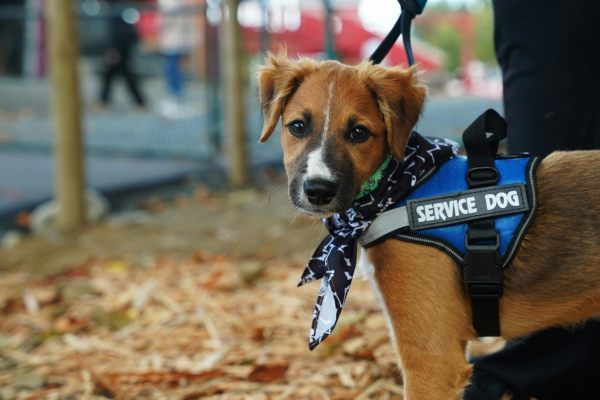
Service dogs are life-changing partners for millions of people with disabilities, but how they’re perceived and treated varies widely across the world. In some regions, communities widely accept and legally protect service dogs. In contrast, people in other regions may view dogs primarily as working animals, unclean, or inappropriate in public spaces. As a result, these different perceptions deeply influence how service dog teams are treated, welcomed, or denied access.
At Justice Speaks, we believe understanding cultural context is essential to building empathy, accessibility, and inclusion. By examining how various cultures perceive service dogs, we can more effectively advocate for disability rights and educate communities on the importance of respectful and lawful access for service dog teams everywhere.
Legal Recognition Without Universal Understanding
In many countries with established disability access laws, governments grant legal protection to service dogs, and people see service dogs more often in public spaces. However, legal recognition does not always translate to public understanding or consistent compliance.
Despite these legal protections, cultural misunderstandings still exist. Many people assume service dogs must look a certain way or wear specific gear. Others believe service dogs are limited to guide dogs, medical alert dogs, mobility aids, psychiatric and allergy alert roles. Even in cultures with a strong legal framework, education gaps remain a significant issue for service dog handler teams.
Dogs as Working Animals, Not Companions
In some parts of the world, perceptions of dogs, and service dogs in particular, vary widely. For some communities, dogs are viewed primarily as guard animals or pets, not as working partners for day-to-day life. This, in turn, can lead to confusion or resistance when service dog teams enter stores, transportation systems, or religious spaces.
For example, in some countries, lawmakers recognize guide dogs in legislation, but access challenges still exist due to limited public understanding. In other areas, service dog laws may exist but are inconsistently enforced. Additionally, cultural emphasis on cleanliness or public order can also influence how service dogs are perceived, sometimes creating barriers even when accommodations are legally required.
Belief-Based Boundaries Around Dogs
In some communities around the world, deeply held religious or cultural beliefs shape how dogs are viewed in public and shared spaces. These beliefs may emphasize separation between animals and certain indoor environments, which can unintentionally create access challenges for service dog teams.
Some countries are beginning to develop clearer disability access laws, but public awareness remains limited. Handlers may face questions, refusals, or pressure to justify their need for a service dog. Education that balances cultural respect with disability rights is essential in these contexts.
Working-Dog Traditions and Rural Context
In communities with strong working-dog traditions, often in rural or land-based settings, dogs are commonly associated with specific functional roles such as herding, hunting, or protection. While this reflects deep respect for a dog’s abilities, it may not always include awareness of modern service dog roles.
In areas with limited access to disability education or programs, service dog teams may face additional scrutiny simply because the concept is unfamiliar. This highlights the importance of culturally responsive education that meets communities where they are.
The Impact of Cultural Misunderstandings
Cultural perceptions directly impact the daily lives of service dog handlers. Lack of understanding can result in:
- Access denials in public spaces
- Intrusive questioning or harassment
- Separation from the service dog
- Increased emotional and physical stress
For handlers traveling internationally or living in multicultural communities, navigating these differences can be exhausting. Awareness and education are key to bridging these gaps and ensuring that disability rights are respected across cultural boundaries.
How Justice Speaks is Making a Difference
At Justice Speaks, education is at the heart of our advocacy. Our school programs introduce students to service dogs early, teaching respect, inclusion, and disability awareness in a way that transcends cultural assumptions. By fostering understanding at a young age, we help shape future communities that are more accessible and compassionate.
Creating true accessibility means acknowledging cultural differences while upholding the dignity and rights of people with disabilities. Service dogs are not an inconvenience; they are essential medical and support partners that enable independence, safety, and participation in society.
You can support Justice Speaks’ mission to educate and advocate by donating to fund school programs, inviting Justice Speaks into classrooms to teach disability awareness, and sharing knowledge about service dog rights and roles within your own community.
Together, we can create a world where service dog teams are respected, regardless of cultural boundaries.